Keith Lockhart
Owner & Master Locksmith · September 1, 2026
Moving into a new home is one of the more consuming experiences most people go through. Between the logistics of the move itself, setting up utilities, getting furniture arranged, and everything else on the list, security tends to land somewhere in the middle of the priority order. There is a general sense that the locks are probably fine and that getting to them eventually is good enough.
I understand that completely. In years of working with Sarasota homeowners, the ones who called me right after moving in are almost always glad they did. The ones who called me after something happened wish they had called first. The difference between those two groups is usually not a matter of how careful or responsible they were. It is a matter of understanding something that most people simply do not think about until they need to.
Here is the security reality of moving into a new home in Sarasota, why professional attention to the locks and entry points beats DIY assumptions every time, and what a proper first-week security review actually covers.
You Have No Idea Who Has a Key to Your New Home
This is the single most important thing I want every new Sarasota homeowner to understand, and it is the one that gets minimized most often. When you receive the keys to a new home at closing, those keys represent the access history of that property from the moment the locks were first installed. Every previous owner, every tenant if the property was ever rented, every contractor who did work, every real estate agent who had a lockbox code, every neighbor who was given a spare, every housecleaner or dog walker or handyman who came through over the years, all of those people potentially had a key at some point.
Some of those keys were returned. Many were not. Some were copied before being returned. A key that was lost three owners ago and forgotten is still a working key if the locks have not been changed. The previous owners may have been completely trustworthy and careful, and there may still be keys floating around that they are not even aware of.
This is not a worst-case scenario I am painting to make the situation sound alarming. It is simply the reality of how key access accumulates over the life of a property. The only way to start your ownership of a home with genuine confidence about who has access is to change the locks or rekey them immediately after taking possession. Everything before that is an unknown that you are choosing to accept.
I recommend doing this before you start moving your belongings in, if at all possible. Once your furniture, your valuables, and your family are in the home, the stakes of an unknown key in the wrong hands are obviously much higher. Starting with a clean access baseline before the house is full makes that risk disappear entirely.
Why Rekeying Is Not Always Enough
Rekeying changes the internal pin configuration of an existing lock so that the old keys no longer work and a new key is required for access. It is faster and less expensive than replacing the entire lock hardware, and for many situations, it is the right solution. But for a new homeowner doing a complete security reset, rekeying has limitations that are worth understanding before deciding it is sufficient.
Rekeying works on the assumption that the existing lock hardware is in good condition and appropriate for the security level the home requires. Locks that are worn, damaged, poorly installed, or simply builder-grade hardware that was never meant to provide serious security cannot be rekeyed into high-performance locks. You end up with a new key for a lock that was inadequate to begin with.
Many homes in Sarasota, particularly those that were built during the rapid residential construction periods of the 1990s and 2000s, came with builder-grade entry hardware that meets the minimum code requirement and nothing beyond it. These locks are functional for keeping a door closed and providing basic resistance to casual entry attempts. They are not designed to resist a determined forced entry attempt, and their keyways are often common enough that key duplication is easier than it should be.
A professional locksmith can assess the existing hardware during a first-visit security review and give you an honest picture of whether rekeying is sufficient or whether the locks themselves should be upgraded. That assessment is something you simply cannot do accurately on your own without knowing what you are looking at, and making the wrong call in either direction costs money, either by spending on replacements you did not need or by leaving inadequate hardware in place after paying to rekey it.
The Entry Points Most New Homeowners Miss Entirely
Front door security gets most of the attention, and for good reason. The front door is the primary entry point and the one that matters most for the overall impression of security the home projects. But a professional security review of a new home covers every entry point, and there are several that new homeowners consistently overlook.
Sliding glass doors are extremely common in Sarasota homes and are among the most frequently neglected security points in residential properties. The standard latch hardware on most sliding doors provides minimal resistance to forced entry, and many older sliding door installations can be lifted off their tracks without any tools at all. A proper sliding door security assessment looks at the latch, the track, the frame condition, and whether an additional security bar or lock is needed.
Garage doors that connect directly to the living space are another entry point that deserves serious attention. If the door between the garage and the home interior is a hollow-core door with a basic privacy latch, the garage entry is effectively the weakest point of the entire home, regardless of how secure the front door is. I regularly recommend upgrading the garage-to-interior door to a solid-core door with a proper deadbolt as part of a new homeowner security review.
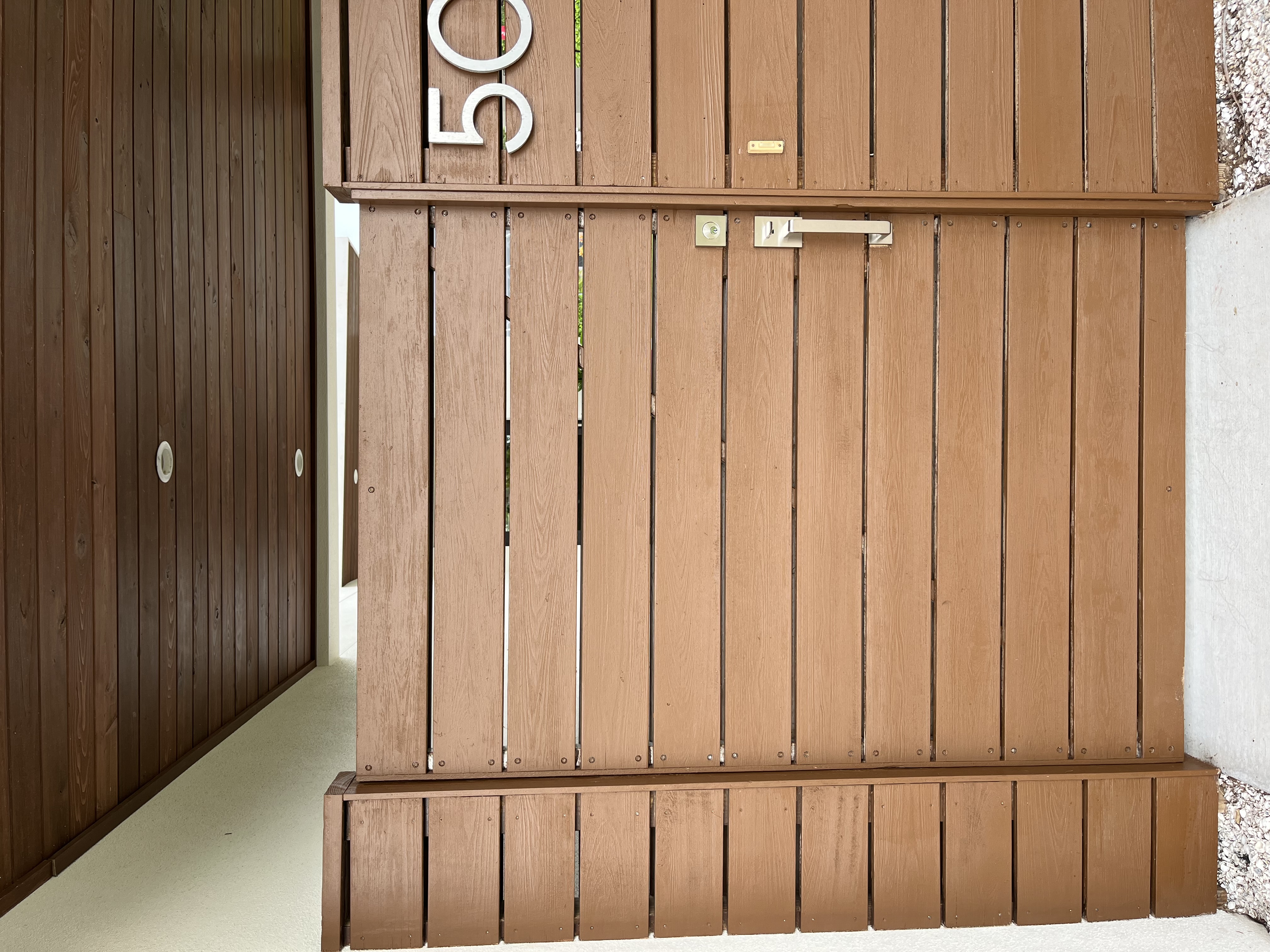
Side gates, exterior storage areas, and pool enclosure doors are additional points that are often keyed separately from the main house and that rarely get attention during a move-in. Knowing whether those locks are functioning correctly, whether they are keyed to match the house or separately, and whether they provide appropriate resistance is part of a complete picture.
What a DIY Lock Change Actually Involves
Some new homeowners decide to change the locks themselves as a cost-saving measure, and I want to be straightforward about what that actually involves and where it tends to go wrong.
Purchasing replacement lock hardware at a home improvement store and swapping it out is a task most handy homeowners can accomplish on a standard door with standard framing. The instructions are in the box, the tools required are basic, and for a straightforward installation on a door that is properly hung and aligned, it is a manageable project.
Where DIY lock changes run into problems is in the assessment that precedes the work, the door conditions that complicate the installation, and the hardware selection. A homeowner buying replacement hardware at a retail store is choosing from consumer-grade products that represent the same category of builder-grade locks they are trying to replace, in many cases. Knowing which hardware provides genuinely better security, how to evaluate the strike plate installation that often matters more than the lock itself, and how to address a door that is slightly out of alignment without creating a new problem requires experience that most homeowners simply do not have.
A poorly installed lock that appears to function correctly can fail at exactly the moment it matters most. A strike plate installed with short screws into the door frame trim rather than into the structural framing behind it will tear out under a kick that a properly installed plate would hold. A deadbolt throw that does not fully extend into the strike plate because of a minor alignment issue provides much less resistance than it appears to. These are the details that a professional locksmith catches as a matter of routine and that a DIY installer often does not know to look for
The Sarasota Environment Creates Lock-Specific Challenges
Sarasota's coastal climate is genuinely hard on lock hardware in ways that homeowners moving from other parts of the country are sometimes not prepared for. Salt air accelerates corrosion on metal components, humidity causes wooden door frames to swell and shift seasonally, and the UV intensity affects certain lock finishes and rubber seal components over time.
Lock hardware that performs reliably in a dry inland climate may develop stiffness, corrosion in the keyway, or alignment issues within a year or two in a coastal Sarasota environment without proper maintenance and appropriate hardware selection. Locks installed near the water on properties in Siesta Key, Longboat Key, or anywhere along the barrier islands face even more aggressive salt air exposure than inland Sarasota homes.
When I do a new homeowner security review, part of what I look at is whether the existing lock hardware is appropriate for the specific location of the property. A home two blocks from the Gulf needs hardware that is rated for coastal exposure. A home that has been sitting vacant for a period before sale may have locks that have already begun to corrode internally, even if they look fine from the outside. These are things that matter for how long your security investment holds up, and that are much easier to address at the start than after a lock has failed.
What a Professional New Homeowner Security Review Actually Covers
When a new Sarasota homeowner calls Lockhart Locksmith, the first visit is a complete walk-through of every entry point on the property. Front door, rear door, side entries, garage entry, sliding doors, any French doors, and gate or fence access are all evaluated. The assessment covers the hardware condition, the installation quality, the door frame and strike plate situation, and whether the current locks are appropriate for the security level the homeowner wants.
From that assessment, I give an honest recommendation about what needs attention immediately, what can be addressed over time, and what is actually fine and does not need any work. Not everything on a new homeowner's property needs to be replaced or upgraded. Part of the value of a professional assessment is knowing what not to spend money on, as well as what genuinely deserves attention.
The residential locksmith services at Lockhart Locksmith cover the full range of what a new homeowner needs: rekeying existing hardware where it is appropriate, replacing locks where the hardware is insufficient, upgrading strike plates and deadbolt installations, addressing sliding door and secondary entry security, and leaving the homeowner with a documented key set and a clear picture of who has access to what.
For homeowners who want to go further, Sarasota's coastal environment and the prevalence of seasonal residency in certain neighborhoods make high-security lock hardware a worthwhile conversation. Homes that sit vacant for part of the year have a different security profile than full-time residences, and the lock hardware, combined with the overall access management approach, should reflect that.
If you are moving into a new home in Sarasota, Siesta Key, Longboat Key, or anywhere in the surrounding area, the best time to call is before the moving truck arrives. Give me a call or text at (941) 400-1038 anytime, and we can schedule a first-week security review that gives you a real picture of where the property stands and what it needs. You can also reach out through our contact page to get started. Starting your ownership with genuine confidence about who has access to your home is one of the most practical things you can do in the first week, and it costs far less than most people expect.
And if you are also thinking about security upgrades beyond the standard lock hardware, our high-security lock options are worth a look. They are a meaningful step up from builder-grade hardware and hold up particularly well in the salt air and humidity that Sarasota puts on everything.
Need a Locksmith in Sarasota?
Lockhart Locksmith is local, licensed, and available 24/7. Call now for fast, reliable service.
CALL (941) 400-1038